Astrotourism
Stargazing Locations
🔭 Mount Owen Observing Site
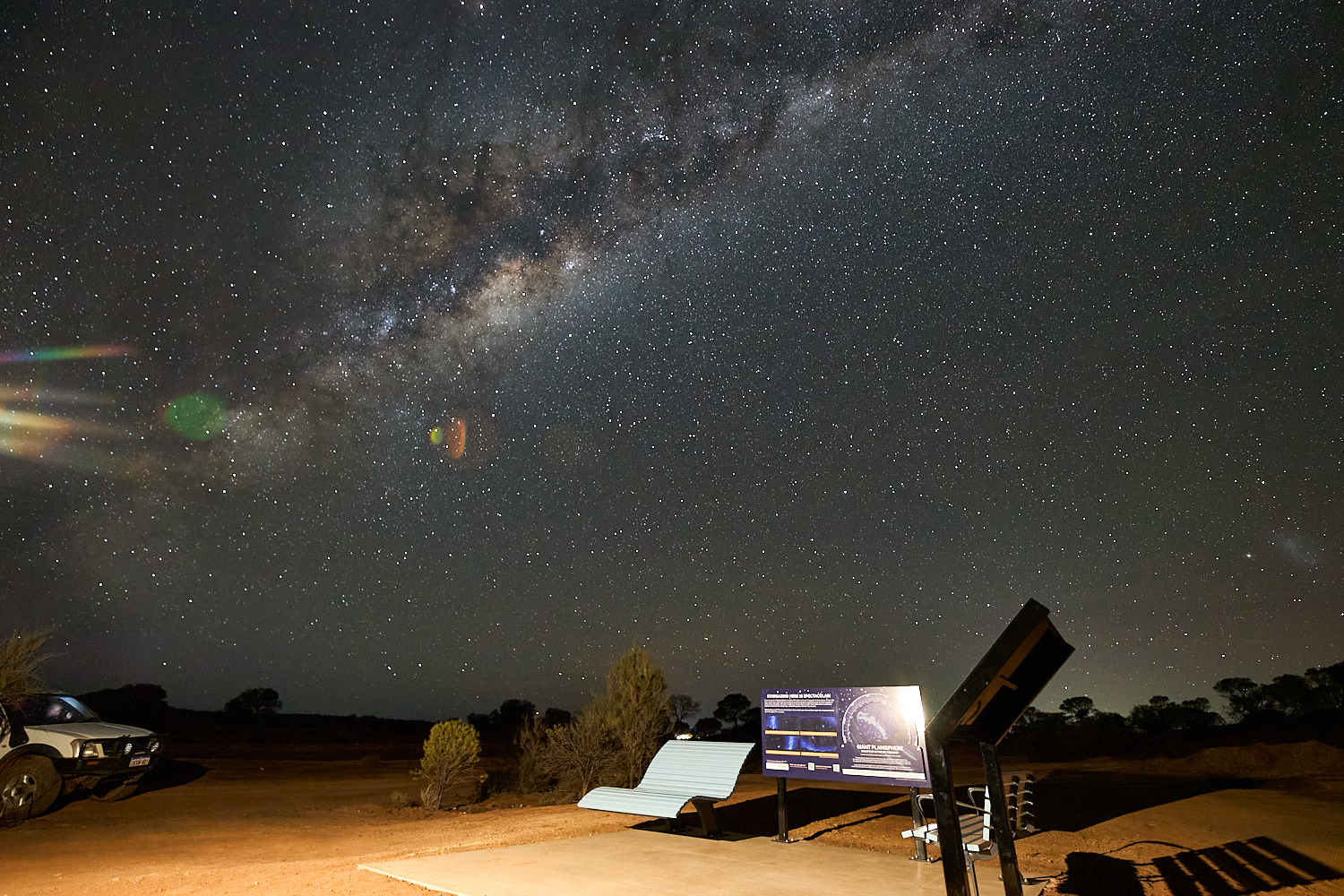
Located just a few minutes' drive out of town on Menzies Cemetery Road, Mount Owen is a fantastic location for stargazing. You don’t even need a telescope to enjoy it—the outback skies are so crisp and clear that there is an incredible amount to see with just a simple pair of binoculars or the naked eye!
Mount Owen is a small hill that offers great views of the surrounding area. After sunset, set yourself up at the base on the northeast side, which is well-protected from the wind. Best of all, you can lay back on the purpose-built moon lounge, relax and comfortably enjoy the spectacular cosmic show rolling above you!
📷 Lake Ballard Astrophotography Hot Spot
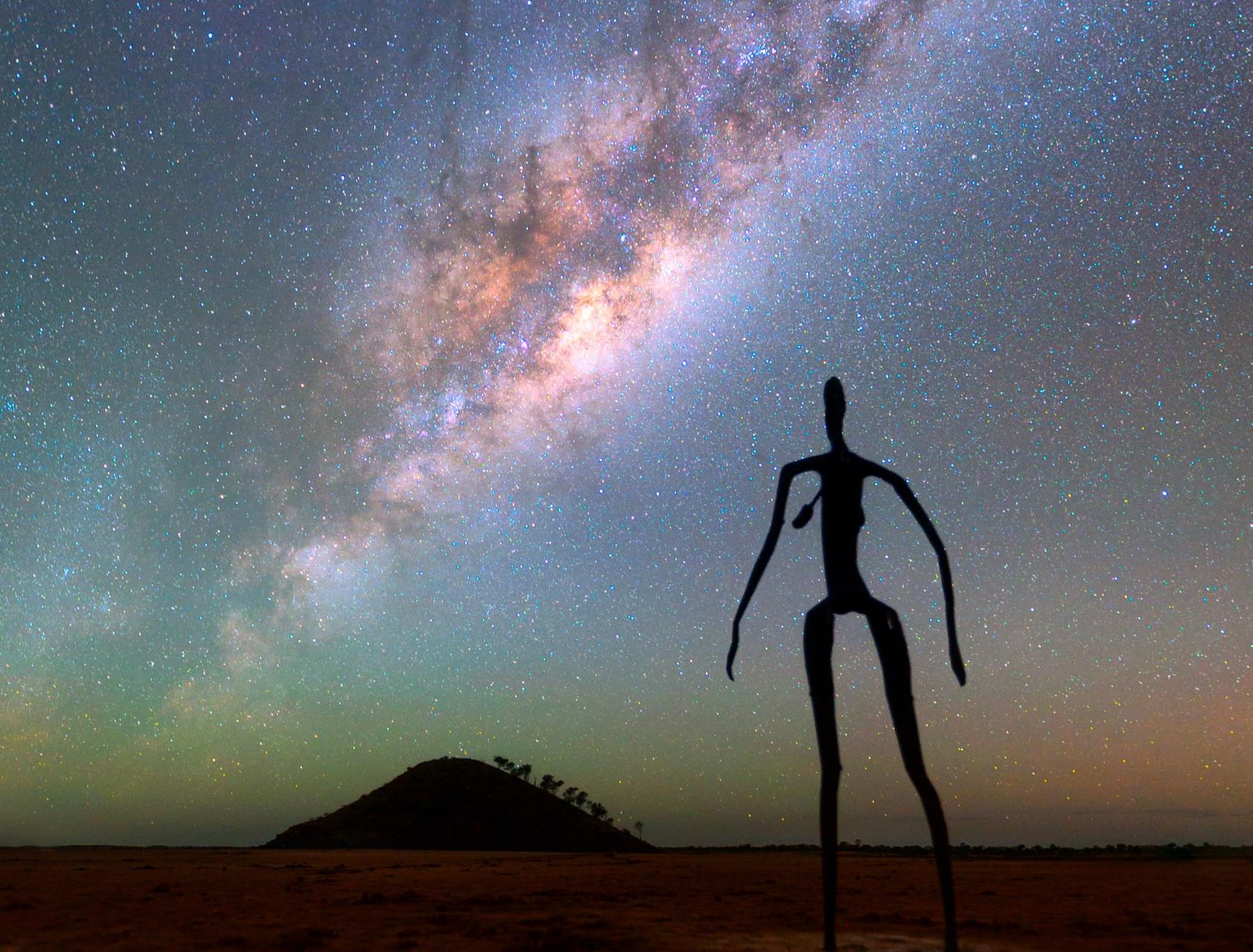
For photography enthusiasts and stargazers alike, you can't miss the iconic Antony Gormley Inside Australia statues, dotted across the vast expanse of Lake Ballard. The opportunities for night-time viewing and photography here are endless.
The incredible 51 statues are spread out over 10 square kilometers. Be sure to arrive before the sun goes down to take your time planning the exact angles you’d like to capture or simply find a spot to sit back and watch the Milky Way put on a spectacular, uninterrupted show above the salt lake.
Plan Your Celestial Journey
Menzies is a comfortable 1.5-hour drive north of Kalgoorlie along the Goldfields Highway. Extend your stay to experience our rich pioneering history by day, and the breathtaking, pristine stars by night.
Where to Stay
-
Menzies Caravan Park: Conveniently located right in town with great facilities.
-
Local Hotel Accommodation: Cozy up in classic outback hospitality.
-
Bush Camping: For the ultimate off-grid dark sky experience, camp directly under the stars at Lake Ballard or Niagara Dam.
Where to stay in Menzies
Visitor Information
Pop into the Menzies Visitor Centre to grab local stargazing maps, check unsealed road and track conditions, and discover fascinating heritage trails to explore during daylight hours.
Explore Further
Don't stop at the town line! Extend your stay in Menzies and discover even more incredible stargazing and reflection locations at nearby Kookynie and Niagara Dam.
The Shire of Menzies is dedicated to protecting the dark night skies of Western Australia for future generations. Find us on the official Astrotourism Towns Map to plan your ultimate road trip through the best stargazing destinations in the state!
What's Up in the Night Sky?
There is so much to see in the night sky no matter when you're travelling to Menzies. Check out these handy month by month tips on what to see when you're visiting.
What Makes WA So Special?
Stargazing in Western Australia is a world-class experience, and WA is home to some of the darkest night skies in the world. The beautiful Milky Way sparkles directly overhead in the Southern Hemisphere and the views are magnificent.
From the Southern Hemisphere, you can see the Southern Cross, the Magellanic Clouds and the beautiful Aboriginal constellation of the "Emu in the Sky".
On a moonless night, the stunning Milky Way Galaxy stretches across the night sky in all its glory. It feels like you could almost touch it! It's something that everyone on Earth should experience more often.
Another advantage WA has is that Perth is the world's most isolated capital city on a continent. This means it's very easy to escape bright city lights to experience wonderful dark night skies full of stars.
Country WA is uncrowded, and its welcoming small towns have low levels of artificial light pollution. The nights are darker for astrophotography, and the air is clean and pure for crystal clear stargazing.
How to Get to Menzies
Stargazing Tips for Beginners
If you're new to stargazing, there are a few things you can do to have a fantastic experience under our amazing night sky:
- Turn out the lights - light pollution hides the stars from view. The more light pollution there is, the fewer stars we can see in the night sky. Turn out as many lights as you can so you can see the Milky Way above.
- Get your night vision - after turning out the lights, it takes your eyes about 10-15 minutes to adjust to the darkness. This is called your night vision. As your eyes become adapted to the dark, you'll start to see more and more stars!
- Avoid white light - most streetlights, torches, camera flashes and car headlights produce white light which will reduce your night vision. If you need light, try using a red-filtered light which doesn't interfere with your night vision.
- You don't need a telescope - thanks to country WA's low light pollution, there is plenty to see with the naked eye. If you have a pair of binoculars, try using these to take a closer look at the Milky Way.
- Download a stargazing app - there are a variety of helpful stargazing apps available. Try to identify and learn about stars, constellations and other objects in the night sky.
- Arrive before sunset - enjoy a beautiful sunset before an evening of stargazing. Who can spot the first star to appear after sunset?
- Look up! - there is so much to see. Look out for some favourites depending on the time of year:
-
- The Moon! Is it a full Moon, a quarter Moon or a beautiful crescent Moon?
- Different coloured stars.
- The Southern Cross constellation.
- The thick band of stars across the sky, which is the plane of our Milky Way Galaxy. Best seen on a dark and moonless night.
- The Large and Small Magellanic Clouds are two galaxies in the Milky Way neighbourhood. They look like two faint clouds in the southern sky.
- Meteors (or shooting stars) will appear as bright streaks of light that flash briefly across the sky.
- A satellite, like the International Space Station, will look like a star that slowly and steadily moves across the night sky.
- Notice how the stars appear to move across the sky from east to west as Earth spins on its axis.
Enjoy your night out under the stars in Menzies.
